![]() |
![]() |
|
|
||||||||||||||
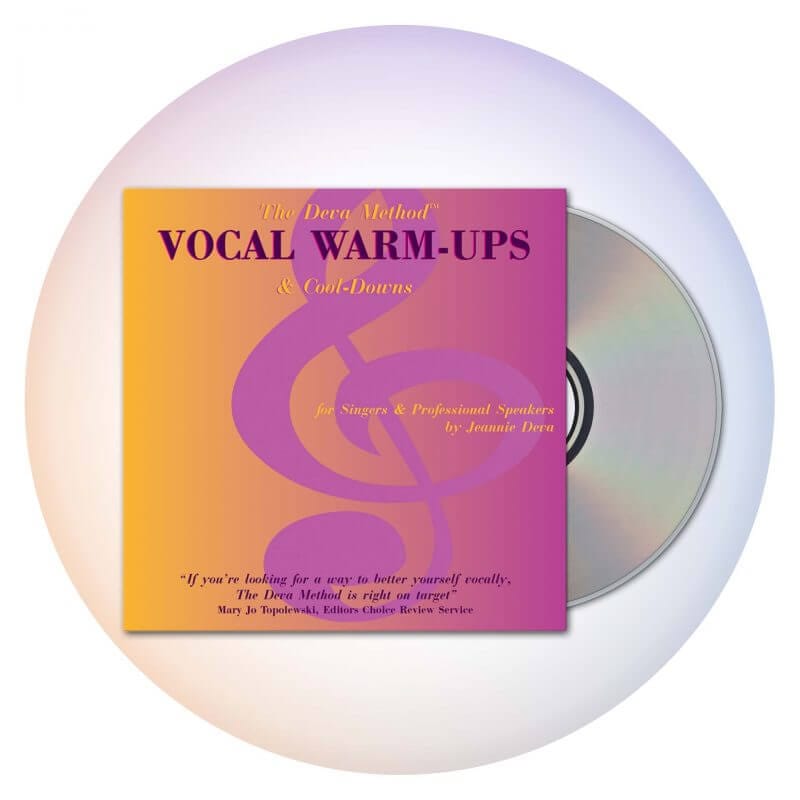
Capturing Your Voice in Recordingby Jeannie DevaI hope you�re doing well! Since recording is an important aspect of a singing career, here�s a question sent me and my answer which I want to share with all my readers. Q. �My voice sounds different on tape, due to what I think is caused by head resonance. What can be done about it?� - R.S. A. Your voice sounds different on tape for several reasons. Three Reasons Firstly, we hear ourselves differently than how others hear us. When you sing, you hear your voice simultaneously in two manners, bone conduction of vibration through the inner ear and air conduction through the outer ear. When you listen to a playback, the inner ear vibration isn't present so you are hearing yourself as others would. The second reason is that the recording process alters the natural resonance and sound quality of the voice. And thirdly, you may be changing the way you sing in response to the different acoustics and electronic alterations occasioned by the recording environment. Each one of these areas may need to be explored to ensure you find the actual reasons for the discrepancy. The human voice is an acoustic instrument designed by nature to resonate both within your body and externally in your immediate surroundings. In order to capture the full sound spectrum of harmonics which makes your voice characteristically �you,� the sensitivity, placement and specifications of the microphone with which you record your voice is quite important. A mic that works beautifully for one singer may make your voice sound shrill and thin. Each mic can be described for it's basic characteristics but the bottom line is how it works with your voice. Two popular recording mics are the Neumann U87, known for good depth and color, great highs, mid range and tonal balance and the AKG C12 which has a clear, transparent high end and is full, soft and round in the bass. If you are recording in a home studio, the much less expensive Australian Rodes mic may fit your budget and yet provide a better rendition of your voice. Recording If you are standing too far from the mic, your voice can tend to lose presence and can sound thinner with possibly more head tone quality. Depending on the quality and design of the mic, if it is placed too close to your nose it may tend to enhance your head/treble resonance. This higher placement is sometimes preferred for backup vocals. However, depending upon the singer and their basic vocal sound and style, I frequently find a lower mike placement more suitable for a lead vocal. The dimensions and acoustic design of the recording room or vocal booth, along with the capabilities of the recording equipment and tape quality also play important roles. It is important to realize that both the overuse as well as the absence of electronic effects on your recorded voice will either approximate or diverge from your acoustic voice. Electronic Effects Effects such as reverb, for example, help to restore the acoustics that have otherwise been electronically stripped from your voice. However, too much reverb will accentuate the treble end of your voice. To hear your voice totally dry � without effects � and expect for it to sound exactly like you, is unrealistic. Sometimes the EQ (equalization) needs to be set appropriately for your voice. This is true especially if the mic is not the optimum choice for your voice, and the recording equipment is not top quality. If you record your voice on home equipment which is less than professional quality, don't expect it to sound like you. Again, I point out that there are many facets electronically which need to be manipulated to reconstruct the "unplugged" or acoustic quality of your voice on tape. I recently heard a demo where the voice of an excellent singer was made to sound almost strained and luster-less by an overuse of compression while mixing the recording. Compression like any other effect has a use when needed, but only a very educated ear would be able to identify the alteration made by the electronics and recognize that it wasn't the way he was singing in the studio that caused the discrepancy. Using Resonance While head resonance itself is important aspect in vocal amplification, it can become troublesome when there is a lack of complementary mid-range and bass vibration in the voice. To achieve a fuller sound spectrum in your voice, it is important to learn how to relax the back of your tongue and access the natural resonance of the back of your throat and the lungs. Learning how to allow this to occur as you sing requires exercises and coaching that will assist you in discovering how to release throat tension and better work with your body's natural internal sound making movements. To ascertain a correct analysis of your voice, it should be done by a trained voice specialist while you sing live and without amplification. This should then be compared to any recording of your voice which you hold in question. By this comparison, you can determine what is the result of recording and what is the result of your singing approach. Your vocal coach can then determine correct exercises for you to develop good resonance. Hope this helps, Jeannie Deva Find more singer's know-how in Free Lessons Jeannie Deva teaches in Los Angeles, California and has worked with singers from around the world. She is the Founder of The Deva Method �, A Non-Classical Approach for Singers � and of The Jeannie Deva� Voice Studios. She is also the author of the critically acclaimed vocal home-study course: "The Contemporary Vocalist" and "The Deva Method Vocal Warm-Ups" CD. Her studios service an international clientele and are staffed with certified Deva Method voice trainers, now celebrating their 26th anniversary. Clients include: Members of the J. Geils Band, Fame and Jesus Christ Superstar, Aimee Mann, Patty Griffin and many more. Have a question you would like answered in a future Vocal Tips? Mail it to Jeannie Deva Copyright 2004. All Rights Reserved. |
||||||||||||||